
Crypto vs Traditional Payment Processors for Adult Content: The Structural Comparison
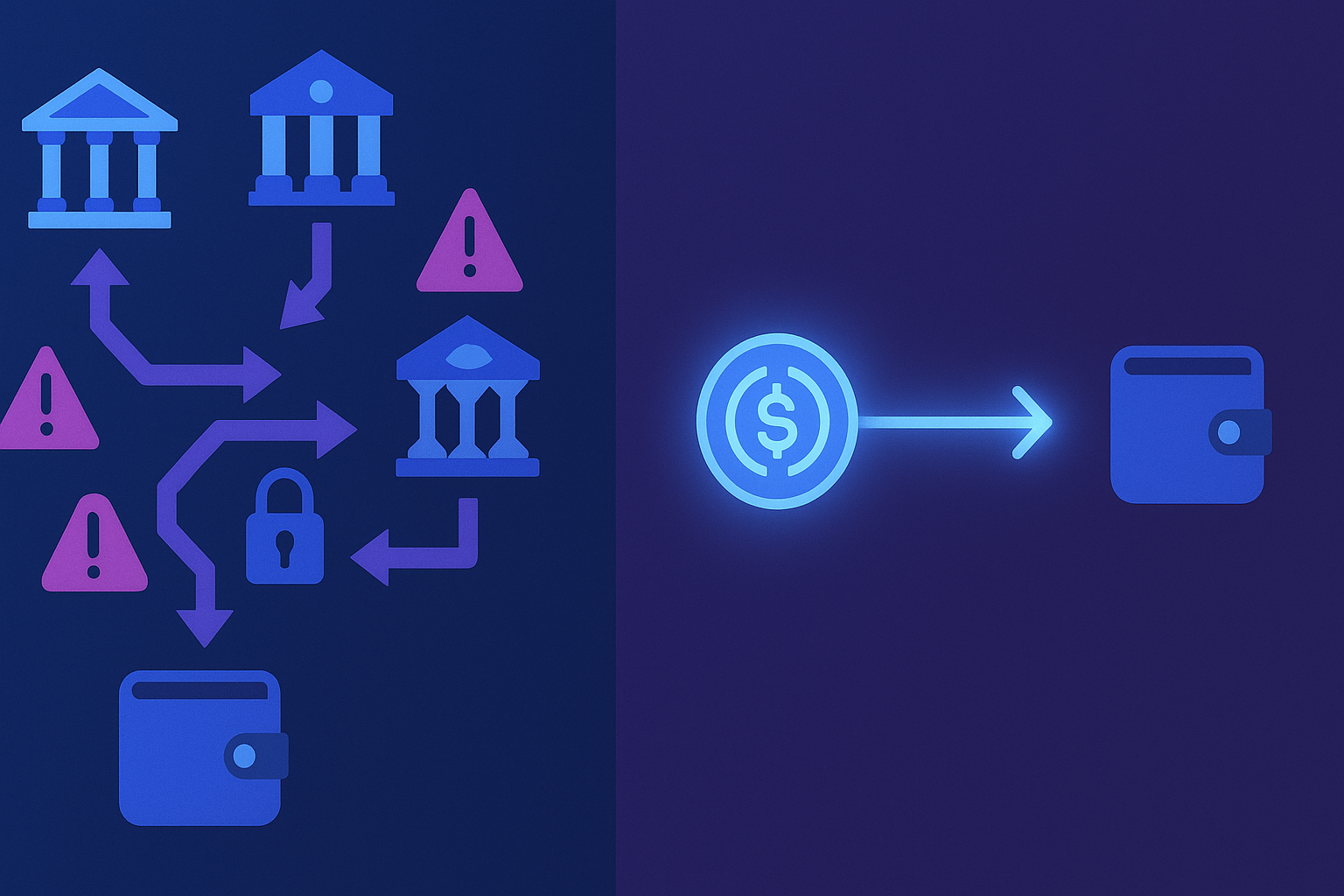
The question of crypto vs traditional payment processors for adult content is no longer hypothetical — it has become the central economic reality for independent creators in 2026. The card-network crackdown that began in 2020 and intensified through 2022 permanently restructured which payment rails are accessible to adult creators, how much they cost, and how much control creators actually retain over their own earnings. Understanding the structural differences is essential before choosing how to get paid.
How Card-Network Rules Create a Two-Tier System for Adult Merchants
Visa and Mastercard do not process payments directly — they set rules that acquiring banks and payment processors must follow. Adult content sits in what networks classify as "high-risk" merchant categories, and that classification cascades downward through the entire payment stack.
Mastercard's updated rules require platforms to verify every content creator's identity, review material before publication, and maintain documented complaint and takedown mechanisms. Visa holds acquirers responsible for ensuring adult-content merchants have age-verification and consent controls before a transaction settles. Most acquiring banks decided this compliance overhead was not worth the revenue. The result: mass deplatforming of adult merchants throughout 2021–2023, and a market that recovered only among a small number of specialist high-risk processors.
Those specialist processors charge for their monopoly position. In 2026, standard rates for adult merchant accounts typically sit between 7% and 12% per transaction, with additional rolling reserves (the processor holds a percentage of each payout for 90–180 days as a fraud buffer) and higher monthly fees. A creator earning $3,000 a month could see $250–$360 leave immediately in processing fees alone, with a portion of the remainder held in reserve for months.
Mainstream processors — Stripe, PayPal, Square — either explicitly prohibit adult content or terminate accounts without notice when risk flags trigger. Creators may discover mid-month that their payment link is dead and their balance is frozen pending review. The card-network compliance chain is politically sensitive at every level and does not distinguish between a compliant adult creator and a non-compliant one once a flag is raised.
Settlement Times, Rolling Reserves, and Who Actually Holds Your Money
Beyond fees, the settlement lifecycle for traditional card payments imposes cash-flow constraints that many creators underestimate.
With a standard adult payment processor, a subscriber's card charge settles to the creator's account in 3–7 business days. Rolling reserves typically retain 5–10% of every payout for 90–180 days. Minimum payout thresholds add another delay. A creator actively growing their subscriber base may find a meaningful portion of earned revenue locked in reserve at any given time, accessible only after the reserve period expires — if the processor does not first freeze the account over an unrelated compliance flag.
Crypto rails invert most of this. USDC on Polygon settles in seconds. There is no intermediary holding a reserve, no minimum payout threshold imposed by a third party, and no acquirer who can freeze a balance over a compliance review. The payment flows directly from the subscriber's wallet to the creator's wallet — non-custodially. Settlement is final and auditable on-chain. For creators who have experienced a frozen processor balance mid-month, the absence of a custodial chokepoint is not a minor feature — it is the feature.
Platforms built on non-custodial infrastructure, like Cryptoscribe, extend this further: the platform never takes custody of creator earnings. Subscriptions are paid in USDC directly to the creator's wallet at the time of the transaction, removing the entire category of "platform holds your money" risk.
Platform Economics: Patreon's Fee Stack vs. Crypto Rails
Patreon is the most visible subscription platform for creators, but its economics reflect a fundamental constraint: it is built entirely on card-network rails. Patreon charges 8–12% of creator revenue depending on the plan tier (new creators after August 2025 are on a flat 10% plan), plus payment processing fees of roughly 2.9% + $0.30 per transaction. On a $10/month subscription, a creator might net $8.30 before accounting for payout to their bank.
Patreon also restricts the most explicit adult content on its platform due to exactly the processor pressure described above — the platform trades away the adult-creator economy in exchange for payment-processor stability. For a longer look at that tradeoff and Patreon's policy history, see Why Patreon Doesn't Support Crypto Subscriptions.
On crypto rails, the economics shift substantially. Crypto payment gateways charge 1–3%, and non-custodial protocols on low-fee networks like Polygon may reduce the effective cost further. More significantly, there are no card-network rules restricting content categories. The content restriction isn't lifted by a permissive policy — it is structurally absent, because there is no card brand to enforce acceptable-use terms.
The honest caveat: crypto requires subscribers to hold and use USDC or another stablecoin, limiting the addressable audience compared to card payments. That friction is decreasing in 2026 — stablecoin wallets are more user-friendly and major platforms including Meta have begun paying creators in USDC — but it remains real. Many creators run both rails: crypto as the primary channel for adult content and card payments for adjacent content that qualifies for standard merchant rates.
Chargeback Exposure and Fraud Risk
Chargebacks are a related but distinct dimension of the crypto-vs-cards comparison, covered in depth at Crypto Payment Adult Platform: Chargeback and Fraud. The short version: crypto transactions are irreversible by design, eliminating the chargeback risk that drives high-risk processor rates — but also shifting the fraud burden in other ways. For a detailed breakdown of fee structures and per-dollar math across specific gateways, see Crypto Payment Gateway Low Fees Comparison.
Practical Takeaways
- Card networks classify adult content as high-risk at the acquirer level — not the processor level — which means deplatforming risk follows you across processors.
- Specialist high-risk processors charge 7–12% per transaction plus rolling reserves; that reserve hold can lock meaningful portions of earned revenue for months.
- Crypto settles directly to your wallet in seconds, with no rolling reserve, no minimum threshold, and no custodial chokepoint that can freeze your balance.
- Non-custodial platforms (where the platform itself never holds creator funds) eliminate an entire category of platform-freezes-your-earnings risk.
- Patreon's 10% fee plus payment processing reflects card-rail economics, plus implicit content restrictions driven by those same rails.
- Hybrid approaches — crypto for adult content, card rails for compliant adjacent content — are increasingly common among creators who want both reach and payout reliability.
- Consult a qualified accountant or financial advisor regarding the tax treatment of USDC income and any jurisdiction-specific payment compliance obligations applicable to your situation.
The structural comparison comes down to who controls the rule-making. On card rails, Visa and Mastercard set acceptable-use terms that cascade through every bank and processor to reach you — enforced by institutions with no interest in preserving any individual creator's access. On crypto rails, content policy is a platform decision rather than a network mandate. For adult creators, that difference is not abstract — it determines whether you have a payment method six months from now.
Platforms like Cryptoscribe are built on this premise: USDC subscriptions on Polygon, paid non-custodially to creator wallets, with 18+ gating at the platform layer rather than delegated to a card network that can revoke access at any time.
Ready to earn in USDC, to your own wallet?